
The NIH-Pentagon deal isn’t a cash grab. It’s a rescue.
As global threats move faster than ever, uniting defense capability with scientific innovation is not a luxury, it’s an imperative, argues former Pentagon official David Lasseter.
As global threats move faster than ever, uniting defense capability with scientific innovation is not a luxury, it’s an imperative, argues former Pentagon official David Lasseter.

As governments increasingly seek to broaden industrial advantages, if the US is going to follow suit, its justifications should be clear, exceptional and subject to consistent rules, two advisors argue.


Avoiding vendor lock and providing more room for sensors and upgrades are critical considerations.

The drone age did not end armored warfare. It rewrote the terms of survival, and Chinese military analysts are paying attention.

In the face of authoritarian oppression, a US-made information warfare tool set could enhance the lives of those living in restrictive countries.
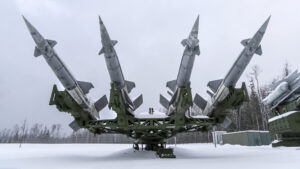
For NATO, reproducibility should become a distinct measure of Russian military capability, driving how the alliance plans for the future.

The Hudson Institute's Daniel Kochis argues in this op-ed that Russia must remain convinced that America’s presence, combined with European NATO members’ firepower, is enough not to risk a direct confrontation.


Architecture that linked sensors, C2, RF effects, and lasers into a distributed c-UAS kill chain.

Nightmare scenarios of AI-engineered super-plagues or nuclear bombs have, understandably, attracted the most attention. But there is lots of lower-hanging fruit for terrorists.

An in-depth discussion with the service's chief of Naval Air Training Command.
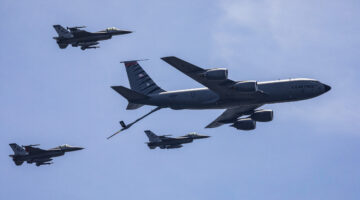
The Center for Strategic and Budgetary Assessments' Greg Malandrino argues in this op-ed that a fight with China will require CCAs for defense as well as offense.
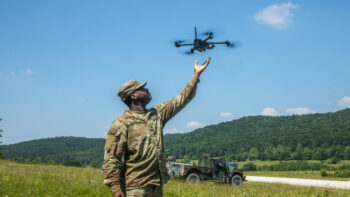
In this op-ed, the commander of the DCMA’s Unmanned Systems – Experimental Command (US-X) warns that unit cost can't be the driver when looking at small drones.

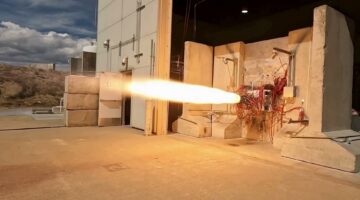
Demand signals from leadership are shaping investments in design, engineering and manufacturing.

In our high-tech, fast-moving world, the US Army should stop optimizing for prediction and start optimizing for uncertainty, argues this retired one-star general.
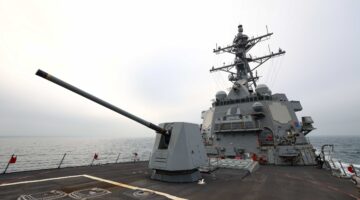
A Heritage Foundation study shows a significant drop in Taiwan Strait transits by the US military under the second Trump administration.
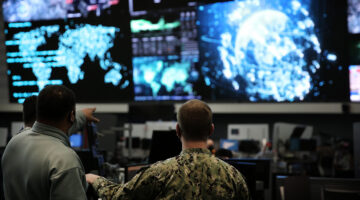
Recent suicides among US cyber personnel should serve as a call to action for implementing durable institutional change, Joshua Stiefel argues.

A recent sequence of undersea-focused defense acquisitions is a welcome pivot to a critical warfighting domain, two CSIS experts argue.